Solar carports are expanding quickly in the UK, doubling as a clean-energy source to power nearby buildings while also expanding the EV charging network with their integrated plug-in points.
Government figures suggest some businesses could save up to £28,000 per year on their electricity bill with a solar carport for 80 spaces.
There is a strong business case here for adapting solar car parks, which is not to be sniffed at. With enough take-up, solar carports could supply more than 25% of the capacity needed to reach the government’s net-zero target by 2030.
As a country, we’re still a long way from reaching this target, but the huge expanse of car parks next to electric-thirsty buildings makes this a solution worth pursuing. Not just for the government, but for taxpayers who want cheaper electricity.
At the same time as installing PV panels and EV chargers for a stable, clean energy supply, it’s also an opportunity to reconfigure and freshen up your car park to make the most of the space available.
What is a solar car park?
A solar car park is more accurately described as a carport with PV panels (solar panels) on its roof. This simple structure uses either a T-frame or a V-frame to support a single- or dual-pitched canopy for cars to park under.
Solar carports are mandatory in some European countries, such as France and Germany, under certain conditions (e.g., car park size, number of spaces, etc.). The UK has chosen not to enforce such a rule, though it admits the benefits make a strong business case:
- Carports make the most of land already in use, giving it a dual purpose, rather than allocating separate or greenfield land to install solar farms.
- Solar is a source of clean, renewable energy that can be stored in batteries or, in some cases, sold back to the grid if there is a surplus.
- Businesses can save thousands of pounds on electricity bills by powering their premises with solar from their carports.
- Solar carports can integrate with EV charging stations to provide additional plug-in points powered by clean energy.
- Carports with or without PV panels protect cars and drivers from rain, snow, and sun.
Of course, there are downsides too. The cost of installation is its biggest drawback, which affects the return on investment you can expect in the long run. The BRE National Solar Centre has put together this guide to help owners and developers build a business case for a solar carport.
Which car parks suit solar carports?
Car parks with more than 80 spaces are likely to see a better return on their investment from installing a solar carport. This is especially true for those with long double rows of parking next to a large building that requires a lot of power, such as a hospital, airport, retail park, or commercial business premises.
Specifically, the BPA (British Parking Association) recommends reviewing the width of your car parking spaces. They likely vary according to the type of bay it is, i.e. parent-and-child, short-stay, long-stay, etc. If you don’t want to change this, you’ll need to find a carport with a frame that can accommodate a range of bay widths.
Keep reading: Disabled parking bay rules and dimensions
Installing a solar carport presents an opportunity to reconfigure your car park. Likewise, if your car park lines are peeling or fading, now is the ideal time to freshen them up for a professional finish that reflects your investment.
Is this the best time to remark your car park?
Consider installing a solar carport as an opportunity to tidy up other areas of your car park that need attention. Specifically, this is a chance to rethink the layout, bay sizes, and traffic flow.
A professional car park marking company can advise you on the best ways to use the space efficiently, while incorporating the carport into the layout. They can advise on directional flow to ease congestion and ensure pedestrians can move safely between the car park and the building.
If changes are required, a reputable marking company can remove the old paint and prepare the surface for proper adhesion of the new lines. All of this can be done in a way that minimises disruption to your car park, working in conjunction with the carport installers so it’s ready for their arrival.
How can a car park marking company help?
From reapplying faded lines to completely reconfiguring the layout, you can do a lot to raise the standard of your car park.
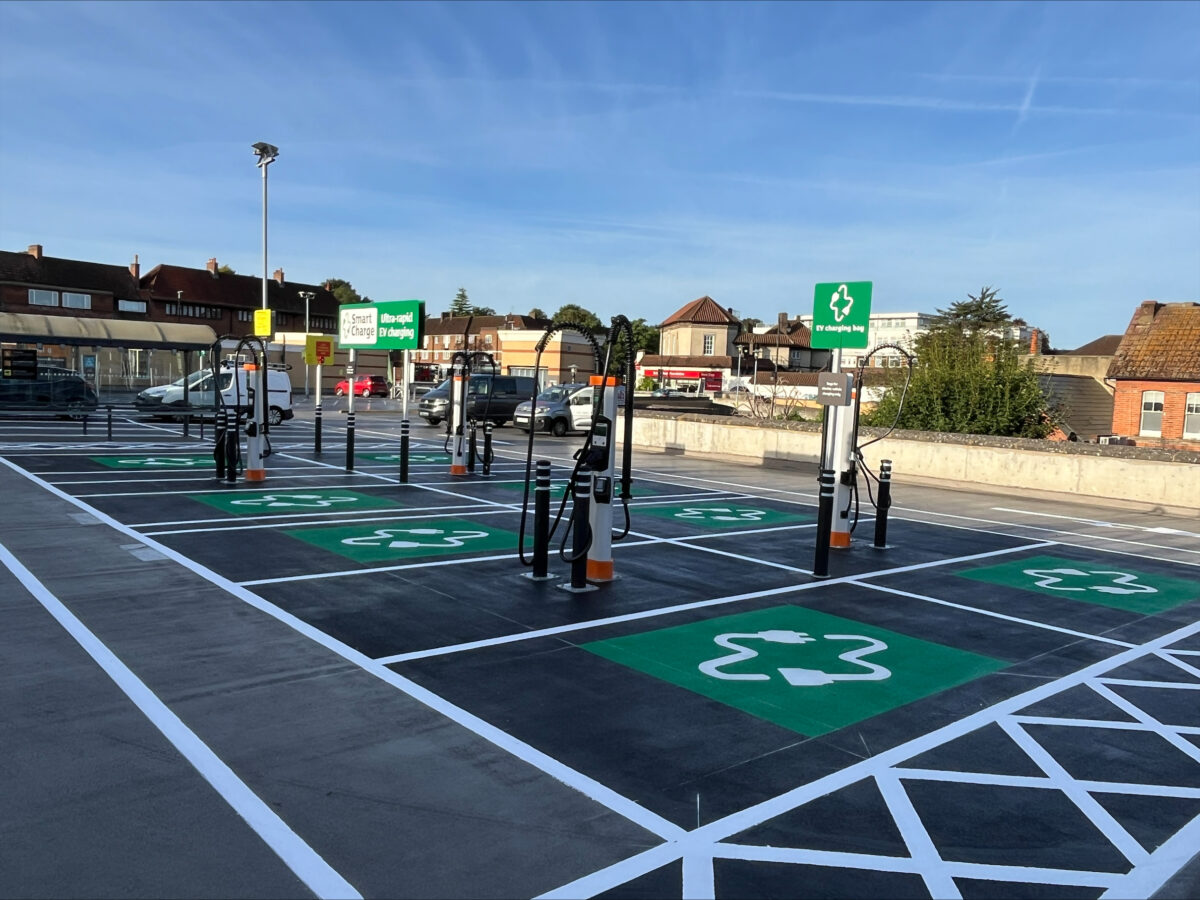
Add EV charging bay marking: If you’re planning to integrate plug-in points, you’ll need markings for your new EV bays. The correct EV charging bay symbols alert petrol drivers to avoid parking there.
Review pedestrian walkways: Now is a good time to review the pedestrian walkways and crossing points in your car park. Clear, well-maintained line markings help keep pedestrians and drivers safe by making routes easier to navigate.
Freshen up your markings: If your lines are fading or peeling, it makes sense to have them re-applied before your solar carport is fitted. Clearly marked lines are crucial for making the most out of your car park’s capacity. Doing it before saves the hassle of painting around the frame’s struts after installation.
A professional-looking car park sets the correct tone for your business from the moment your colleagues and visitors arrive. That doesn’t just include the car park markings; it’s everything from signage to how well maintained it is.
Above all, it should be safe for drivers and pedestrians, and weather-resistant line marking is a practical, long-lasting way to support that.
Keep reading: Seasonal maintenance: Looking after your car park